

What are the new bank withdrawal rules 2026 and how it affects you as you walk up to an ATM to withdraw cash for an emergency, and it tells you that you have hit your daily limit. Or you try to take out $3,000 at your bank and suddenly find yourself answering questions you did not expect.
What is happening? And why does it feel like accessing your own money is getting harder every year?
The truth is that new bank withdrawal rules in 2026 are creating real changes that affect everyday Americans. A growing patchwork of bank policies, federal reporting requirements, and tightening surveillance rules is making it harder for everyday Americans to move their own money without questions, fees, or scrutiny.
This complete guide explains every significant new bank withdrawal rule in 2026, what changed, what stayed the same, what it means for your money and exactly what you need to do to protect yourself.
Whether you are saving money, paying off debt or just trying to manage your everyday finances, understanding these rules is essential. Check out our complete save money guides and our budgeting resources for more strategies on protecting and managing your money in 2026.
The Big Picture | Why Bank Rules Are Changing in 2026
Before diving into the specific rules it helps to understand WHY banks and regulators are tightening their grip on cash transactions in 2026.
Three Forces Driving the Changes
Federal Regulatory Modernization
Changes to U.S. banking rules took effect in April 2026 as the three major banking regulators, the Federal Reserve, the Federal Deposit Insurance Corporation and the Office of the Comptroller of the Currency, issued a final rule affecting capital requirements for the largest U.S. banks. While these changes primarily affect how banks operate internally, the ripple effects reach everyday consumers.
Expanded Cash Monitoring
Starting in 2026, new requirements ask banks and businesses to report in more detail cash operations between $1,000 and $10,000. It does not mean that each person will be treated as a criminal, but it does mean that these transactions will be monitored by regulators.
ACH Payment Fraud Rules
In March 2026, Nacha implemented changes requiring businesses to strengthen fraud monitoring for their ACH transactions. The rules apply to businesses and payment processors that handle ACH transactions, requiring them to monitor for suspected fraudulent or scam transactions. This affects how quickly your electronic transfers and direct deposits are processed.
ATM Withdrawal Limits in 2026 | The Complete Breakdown
The most immediate rule that affects everyday Americans is the daily ATM withdrawal limit set by your specific bank.
How Much Can You Actually Withdraw From an ATM in 2026?
Cash withdrawal limits tend to be somewhere between $300 and $1,500 per day, although the exact amount varies by bank and even account type.
Here is the breakdown of withdrawal limits by method in 2026:
| Withdrawal Method | Typical Daily Limit | Notes |
|---|---|---|
| ATM Machine | $300 to $1,500 | Most restrictive limit |
| Debit Card Purchase | $2,500 to $5,000 | Higher than ATM limit |
| Bank Teller (In Person) | $5,000 to $20,000 | Highest limit, ID required |
| Savings Account | Varies | Some banks still impose monthly limits |
ATM Limits by Major Bank in 2026
| Bank | Standard Daily ATM Limit | Premium Account Limit |
|---|---|---|
| Chase | $500 to $1,000 | Up to $3,000 |
| Bank of America | $1,000 | Up to $2,500 |
| Wells Fargo | $300 to $1,500 | Up to $2,500 |
| Citibank | $1,000 to $2,000 | Up to $5,000 |
| Capital One | $1,000 | Up to $1,500 |
| US Bank | $500 to $1,000 | Up to $2,500 |
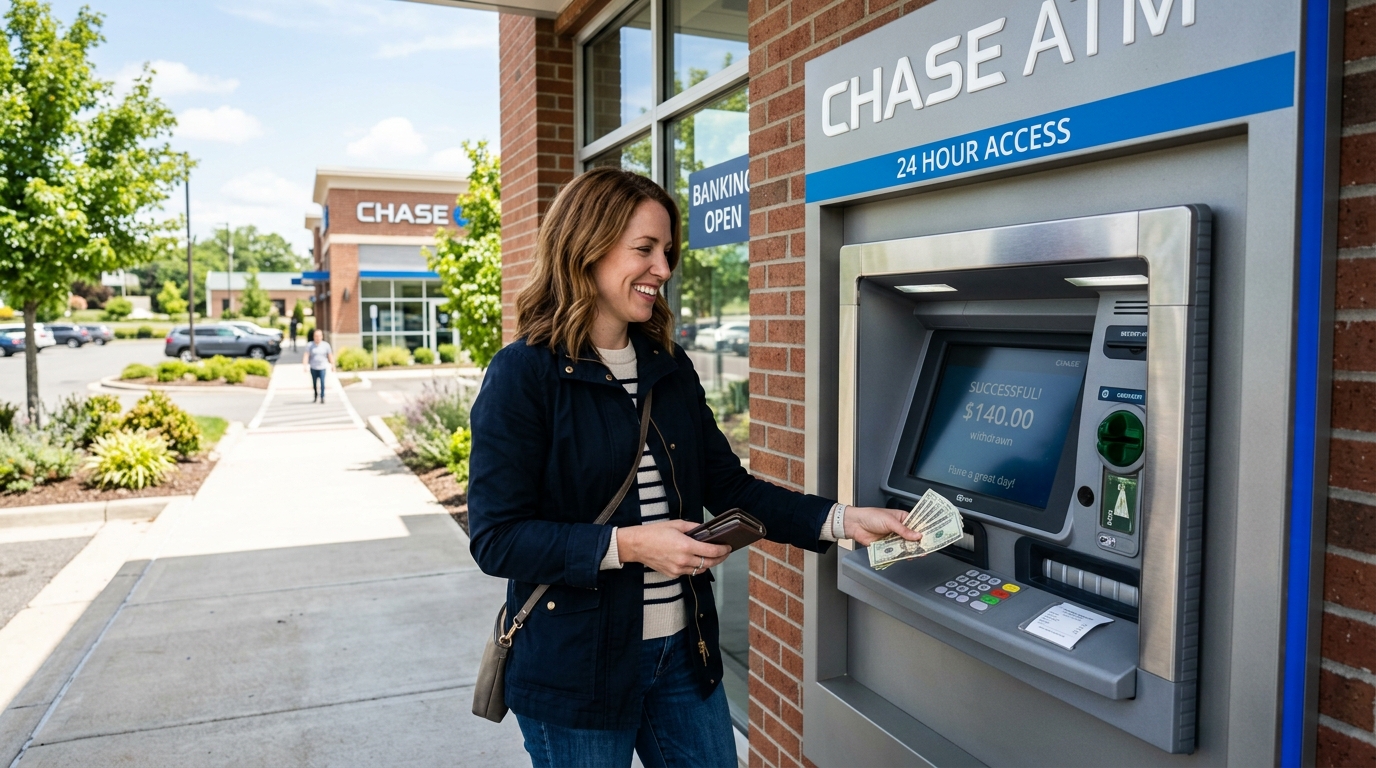
New accounts may start lower and build over time. Temporary increases for documented reasons like travel, a cash purchase, moving expenses are routinely approved same day. There is no fee to request an increase.
Why Are ATM Limits So Low?
Many people are shocked to discover how low their daily ATM limit actually is. Financial institutions place limits on daily ATM withdrawals to protect customer accounts from fraudulent activity. If someone gets ahold of your debit card information and attempts to fraudulently pull money out of your checking account, the limits in place may prevent the person from cleaning out your entire account.
Additionally, ATMs can only carry so much cash at once. Limiting the amount of money that can be withdrawn each day ensures there is enough cash on hand for all customers.
ATM Limit vs. Debit Card Spending Limit | Key Difference
Most Americans do not realize these are two completely separate limits.
Your daily ATM limit is a cap on cash withdrawals from ATM machines only. It is separate from your debit card spending limit which applies to purchases at stores and online.
This means if your ATM limit is $1,000 but your debit spending limit is $5,000, you can still make a $4,000 purchase at a store with your debit card even after maxing your ATM withdrawal for the day.
The $10,000 Rule | What You Need to Know
One of the most misunderstood rules in American banking is the $10,000 cash reporting requirement. In 2026 this rule remains in full effect and the monitoring around it has tightened.
What Is the $10,000 Reporting Rule?
You can generally withdraw up to $10,000 from your account within a 24-hour period without the bank or credit union reporting the transaction to the Internal Revenue Service.
For withdrawals over $10,000, the bank is required to file a Currency Transaction Report with the IRS, which is routine and not a cause for concern.
This means if you need to withdraw $10,500 for a legitimate purchase your bank will file a routine report. This is not a red flag. It is not a criminal investigation. It is simply a legal requirement that has existed for decades.
What Is Structuring and Why Does It Matter?
Here is where many ordinary Americans accidentally get into trouble.
Banks are required to file Suspicious Activity Reports when they suspect structuring, even if no single transaction exceeds $10,000. Once a SAR is filed, IRS-CI or FinCEN may open a criminal investigation. So something as innocent as making a few medium-sized withdrawals in a short period can light up a warning signal you did not even know existed.
Structuring is the practice of deliberately breaking large transactions into smaller amounts specifically to avoid the $10,000 reporting threshold. This is illegal, even if the money is entirely yours and legally obtained.
What NOT to do:
- Withdrawing $9,500 repeatedly over several days to avoid the $10,000 threshold
- Making multiple smaller withdrawals at different ATMs or branches on the same day
- Deliberately keeping all transactions just under $10,000
What IS fine:
- Withdrawing $15,000 at once with proper ID and documentation of purpose
- Making regular withdrawals that match your normal financial patterns
- Asking your bank for a cashier’s check for large purchases instead of cash
New 2026 Expanded Monitoring | Between $1,000 and $10,000
This is the most significant new development affecting everyday Americans in 2026.
Starting in 2026, new requirements ask banks and businesses to report in more detail cash operations between $1,000 and $10,000. Until now, banks only reported operations from $10,000 onwards, and lower amounts were considered part of everyday life. Now they will start investigating from $1,000. They are not going to monitor absolutely all people who withdraw $1,000 once in their lives, but people who have patterns. Recurring moderate cash use, the kind that describes millions of small business owners, gig workers, and cash-reliant consumers may start drawing more scrutiny than ever before.
What this means practically:
If you regularly withdraw $800 to $1,500 at a time in cash as part of your normal routine, nothing is going to happen to you. This monitoring focuses on patterns that suggest illegal activity like money laundering or tax evasion.
If you are a gig worker, small business owner or anyone who regularly deals in cash, keep records of why you are withdrawing cash. Receipts, invoices, and basic documentation protect you if questions ever arise.
Savings Account Withdrawal Rules | What Changed and What Stayed
Many Americans are confused about savings account withdrawal rules after the changes that began in 2020 and continued into 2026.
Regulation D | The Six-Transaction Limit Is Gone
Savings accounts had a federal rule called Regulation D that previously limited certain types of withdrawals known as convenient transactions to no more than six per month. That changed in April 2020 when the Federal Reserve announced it was removing the requirement for banks to enforce the limit.
This means the federal government no longer REQUIRES banks to limit your savings account withdrawals to six per month. However, and this is critical, many banks have chosen to KEEP their own version of this limit in their account terms.
Check Your Bank’s Savings Account Rules
Even though the federal Regulation D limit was removed, your specific bank may still impose its own monthly withdrawal limit on savings accounts. Common bank policies include:
- No monthly limit | increasingly common at online banks
- 6 transactions per month limit | still enforced by many traditional banks
- Fees for excess withdrawals | some banks charge $5 to $15 per transaction over the limit
- Account conversion | some banks will convert your savings account to a checking account if you exceed withdrawal limits regularly
Action to take today: Log into your bank account or call your bank and ask specifically: “Does my savings account have a monthly withdrawal limit and what happens if I exceed it?”
Large Cash Withdrawals | New Protocols in 2026
If you need to withdraw a large sum of cash like for a home repair, a car purchase, or any other legitimate reason, here is what to expect at your bank in 2026.
What Happens When You Withdraw $3,000 to $9,999
In this range you will likely need to:
- Show a valid government-issued photo ID
- Answer basic questions about the purpose of the withdrawal in some cases
- Possibly wait while the teller processes the transaction
Branch cash withdrawals typically do not count against your ATM limit and can be much larger. Call ahead for amounts over $10,000.
Pro tip: If you know you need a large amount in advance, call your bank the day before. Many branches need to order extra cash for large withdrawals and will serve you much faster if you give them advance notice.
What Happens When You Withdraw $10,000 or More
For withdrawals over $10,000 the bank is required to file a Currency Transaction Report with the IRS. This is routine and not a cause for concern.
You will need to:
- Provide government issued photo ID
- Potentially fill out a brief form
- Wait slightly longer than a normal transaction
This process is completely normal and happens thousands of times per day across America. It does not mean you are suspected of any crime. It is simply a mandatory federal reporting procedure.
Alternatives to Large Cash Withdrawals
In most situations there are smarter alternatives to withdrawing large amounts of cash:
Cashier’s Check | Your bank issues a guaranteed check made out to the recipient. Safer than cash, widely accepted for large purchases like cars or real estate.
Wire Transfer | Electronic transfer of funds directly to another bank account. Best for large amounts sent to businesses or individuals.
Certified Check | Similar to a cashier’s check, guaranteed funds that are more secure than personal checks.
ACH Transfer | Electronic bank-to-bank transfer. Slower but free in most cases. Best for planned large payments.
Debanking | The New Banking Concern of 2026
A growing number of Americans are discovering a brand new banking problem in 2026 that most people have never heard of: debanking.
What Is Debanking?
Some customers are finding that their banks are shutting them out entirely, a practice known as debanking. In December, congressional committees released reports concluding that Biden-era policies had contributed to the unlawful debanking of digital asset and other lawful businesses. Those reports put direct pressure on the banking agencies to revisit supervisory practices tied to reputational risk.
In plain English: some banks are closing customer accounts without warning or clear explanation. While this has primarily affected businesses operating in industries banks deem risky, it is a growing concern for individual consumers too.
Who Is at Risk of Being Debanked?
The accounts most frequently targeted for closure include:
- Accounts belonging to cryptocurrency businesses or frequent crypto buyers
- Accounts showing unusual cash transaction patterns
- Accounts flagged by automated fraud detection systems for unusual activity
- Small business accounts in certain industries
How to Protect Yourself From Debanking
Keep your banking activity consistent and predictable. Sudden large changes in transaction patterns, even for completely legitimate reasons, can trigger automated alerts.
Maintain accounts at more than one bank. If your primary account is unexpectedly closed, having a backup account at a different institution prevents complete financial disruption.
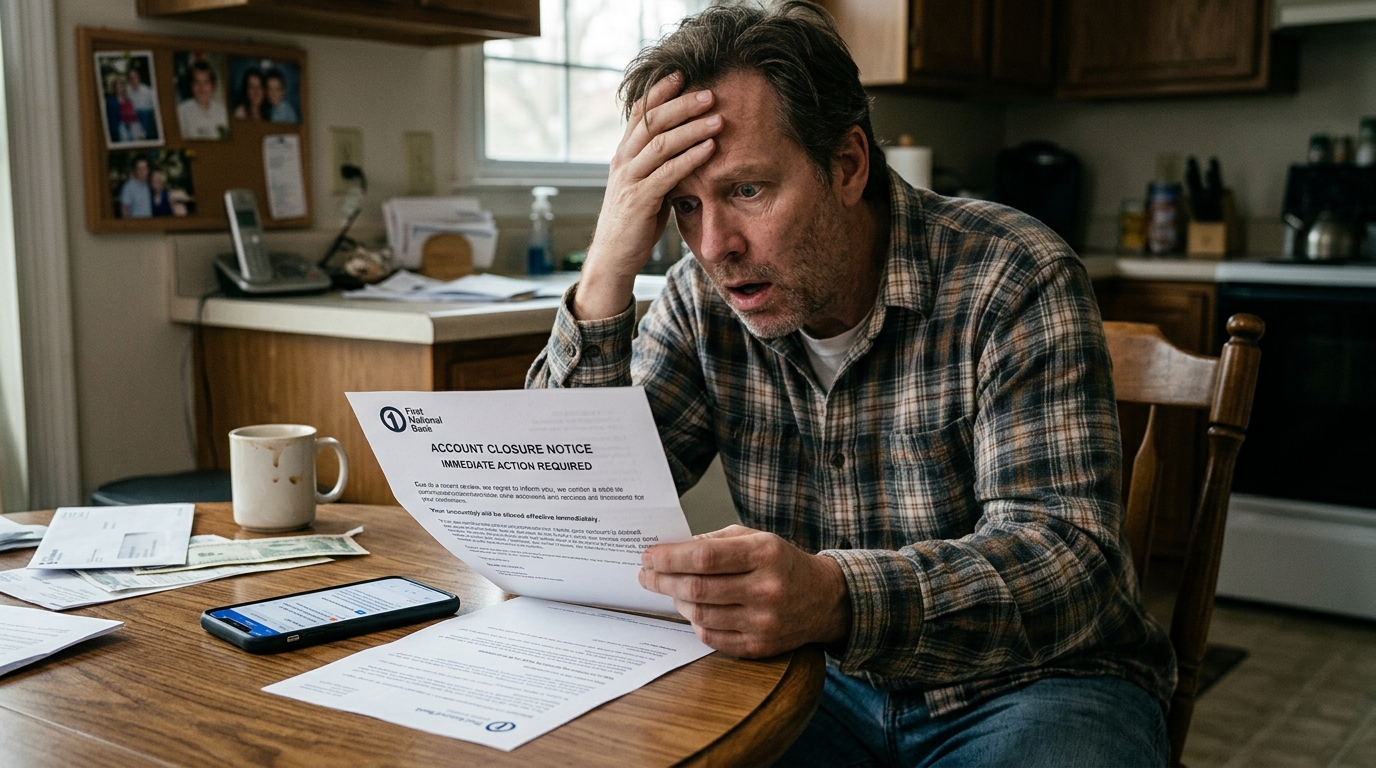
If your account is closed without explanation you have the right to request a written reason. Contact the bank in writing and keep records of all communication.
How to Request a Higher Withdrawal Limit
Most Americans do not know they can simply ask their bank to raise their daily ATM limit, and often get approved the same day.
Temporary Limit Increase
If you need more cash than your limit allows for a specific one time purpose:
Step 1 | Call the number on the back of your debit card
Step 2 | Explain you need a temporary limit increase and the reason like travel, a large purchase, an emergency
Step 3 | The customer service representative will either approve it immediately or ask you to visit a branch
Temporary increases for documented reasons such as travel, a cash purchase or moving expenses are routinely approved same day. There is no fee to request an increase.
Bank of America customers can request a temporary increase through the mobile app. The app option is the fastest, some customers report same-day approval in under five minutes.
Permanent Limit Increase
For a permanent increase in your daily ATM limit:
The decision may depend on a number of factors including banking history, the type of account one holds and the amount of the increase requested. If it is for a one-time purchase, a request for a temporary increase may be more appropriate.
A permanent increase is more likely to be approved if:
- You have been a customer for several years
- Your account has a consistent positive balance
- You have a premium or rewards account tier
- You have never had overdrafts or fraud issues
Upgrade Your Account Tier
The two best long-term solutions if you find yourself regularly hitting your ATM limit are to upgrade your account tier at your current bank, the fastest path if you want to stay where you are, or to switch to Charles Schwab or Fidelity, both of which offer unlimited ATM access worldwide with full fee reimbursement and no minimum balance requirements.
The ACH Rule Changes | What They Mean for Your Direct Deposits and Transfers
If you use direct deposit for your paycheck or regularly transfer money between accounts, the 2026 ACH rule changes affect you directly.
What Are the New ACH Fraud Monitoring Rules?
In March 2026, Nacha implemented changes requiring businesses to strengthen fraud monitoring for their ACH transactions. The rules require monitoring for suspected fraudulent or scam transactions.
What This Means for Everyday Americans
For employees receiving direct deposit: Your paycheck processing is unaffected. Direct deposits from employers are standard ACH credits that pass through the new monitoring without any issues.
For people who send money: Transfers to new recipients may take slightly longer to process as banks implement more thorough verification steps.
For small business owners: You may receive requests from your bank to verify certain payment recipients or transaction purposes if your payment patterns trigger the new monitoring systems.
For gig workers: Payments from platforms like Uber, DoorDash and other gig economy employers are standard ACH payments. These are unaffected by the monitoring changes.
Your Rights When Withdrawing Money in 2026
Despite all the new monitoring and reporting requirements, your fundamental right to access your own money remains protected by federal law.
Your Core Banking Rights
You have the right to access your money. Banks cannot refuse to let you withdraw your own funds without a specific legal reason. If a bank is holding your money without explanation, file a complaint immediately.
You have the right to know your limits. The documents provided to you at account opening and with your debit card usually include your ATM withdrawal limit. Your ATM withdrawal limit may also be mentioned inside your bank’s official banking app.
You have the right to dispute unauthorized transactions. Under federal law Regulation E, your liability for unauthorized ATM transactions depends on how quickly you report them. If you report a lost or stolen card within 2 business days, your maximum liability is $50. Wait longer than 2 days but fewer than 60 and your liability increases to $500. After 60 days you could be responsible for the full amount.
You have the right to file complaints. If you believe your bank has treated you unfairly, file a complaint with the Consumer Financial Protection Bureau at consumerfinance.gov/complaint.
How to Protect Yourself Under the New Rules
Set up instant transaction alerts. Setting up instant transaction alerts on your bank’s app is one of the most important things you can do to protect yourself. You will know immediately if any unauthorized withdrawal is made from your account.
Keep records of large cash transactions. If you regularly withdraw $1,000 or more for legitimate business or personal reasons, keep basic records, receipts, invoices or even a simple note explaining the purpose protects you if questions ever arise.
Know your limits before you need them. The worst time to discover your daily ATM limit is when you are standing at the machine needing cash urgently. Check your current limits in your banking app today.
Never structure transactions deliberately. Making multiple withdrawals just under $10,000 specifically to avoid reporting is illegal regardless of whether the money is legitimately yours.
Smart Money Management Under the New Rules
Understanding the new bank withdrawal rules is one part of smart money management. Here is how to apply this knowledge to protect and grow your financial situation.
Keep an Emergency Cash Reserve at Home
Given daily ATM limits of $300 to $1,500, a home cash reserve can be invaluable during emergencies when you cannot access your bank. Financial experts recommend keeping $200 to $500 in small bills at home in a secure location for genuine emergencies.
This is part of a broader emergency fund strategy, check our save money guides for the complete approach to building financial security in 2026.
Use Cashier’s Checks and Wire Transfers for Large Purchases
For any purchase over $3,000 consider requesting a cashier’s check from your bank instead of withdrawing cash. This eliminates the need to hit daily ATM limits, removes the risk of carrying large amounts of cash and provides a documented paper trail for the transaction.
Build Your Credit to Access Better Banking Products
A customer’s personal bank ATM withdrawal limit may depend on their account type. New or basic accounts may come with lower limits than premium accounts.
Better credit scores qualify you for premium bank accounts with significantly higher withdrawal limits, lower fees and better terms overall. Our guide on the Milestone Credit Card covers how to start rebuilding credit and our complete get out of debt series shows you how to clear the debt that may be holding your credit score back.
Consider Online Banks for Higher Limits and No Fees
Traditional brick-and-mortar banks tend to have lower ATM limits and higher fees. Online banks and financial platforms often provide significantly better terms.
Charles Schwab and Fidelity both offer unlimited ATM access worldwide with full fee reimbursement and no minimum balance requirements.
If you are regularly hitting your ATM limits or paying ATM fees, switching to an online bank could save you $100 to $300 per year in fees alone while giving you better access to your own money.
Frequently Asked Questions | New Bank Withdrawal Rules 2026
How much cash can I withdraw from my bank in 2026?
How much cash you can withdraw from a bank in one day can range anywhere from $300 to $20,000. The cap depends on your bank’s policies and how you are withdrawing the money. Daily withdrawal limits are typically lowest at ATMs ranging from $300 to $1,000, somewhat higher for debit card transactions at commonly around $5,000 and highest for in-person withdrawals at a teller which can be as high as $20,000.
Do I have to explain why I am withdrawing money?
For amounts under $10,000 in most normal circumstances, no, you do not need to explain your withdrawal. For amounts over $10,000 your bank will file a routine Currency Transaction Report with the IRS and may ask the purpose. This is standard procedure and not cause for concern as long as the money is legitimately yours.
What is the $10,000 bank rule in 2026?
You can generally withdraw up to $10,000 from your account within a 24-hour period without the bank or credit union reporting the transaction to the IRS. For withdrawals over $10,000 the bank is required to file a Currency Transaction Report with FinCEN which is routine and not a cause for concern.
What are the new cash monitoring rules in 2026?
Starting in 2026 new requirements ask banks and businesses to report in more detail cash operations between $1,000 and $10,000. This does not mean each person will be treated as a criminal but it does mean these transactions will be monitored by regulators. The focus is on people who have patterns of suspicious behavior rather than individuals making occasional moderate withdrawals.
Can my bank limit how much I withdraw from my savings account?
Yes, while the federal Regulation D six-withdrawal monthly limit was removed in 2020, individual banks may still impose their own limits on savings account withdrawals. Check your specific bank’s account terms or contact customer service to find your savings account withdrawal limit.
How do I increase my ATM withdrawal limit?
Call the customer service number on the back of your debit card and request a temporary or permanent increase. The decision may depend on a number of factors including banking history, the type of account and the amount of the increase requested. Temporary increases for documented reasons like travel or a large purchase are commonly approved the same day.
What is structuring and is it illegal?
Structuring is deliberately breaking transactions into amounts just below $10,000 specifically to avoid federal cash reporting requirements. It is illegal under federal law, even if the money is completely legitimate. Never make withdrawal decisions based on avoiding the $10,000 reporting threshold.

The Bottom Line | New Bank Withdrawal Rules in 2026
The new bank withdrawal rules in 2026 create real changes that every American should understand, but they are not cause for panic.
Here is what matters most:
Your daily ATM limit is typically $300 to $1,500. You can request an increase at any time for any legitimate reason.
The $10,000 reporting rule remains in effect. Withdrawing over $10,000 triggers a routine federal report, it is not a criminal investigation.
New monitoring between $1,000 and $10,000 targets suspicious patterns, not ordinary Americans making regular withdrawals.
Structuring is illegal, never deliberately break transactions into smaller amounts to avoid reporting thresholds.
You have rights. Banks must tell you your limits, give you access to your own money and handle disputes fairly under federal law.
The best way to protect yourself under these new rules is to stay informed, keep basic records of large cash transactions, know your current account limits and build the kind of financial foundation that gives you access to better banking products and higher limits.
For more strategies to protect your money and build financial security in 2026, browse our complete save money guides, our budgeting resources and our 50/30/20 budget rule guide for a complete framework for managing your money smarter every month.
